

15 Nov 2026
Tool Life Planning: A Fresh Cutting Edge Adds a Second Stop
A 240-part order needs 8 cutting hours. Keeping an approved edge with 60 parts left requires one change; fitting a fresh edge first requires two and misses the deadline.
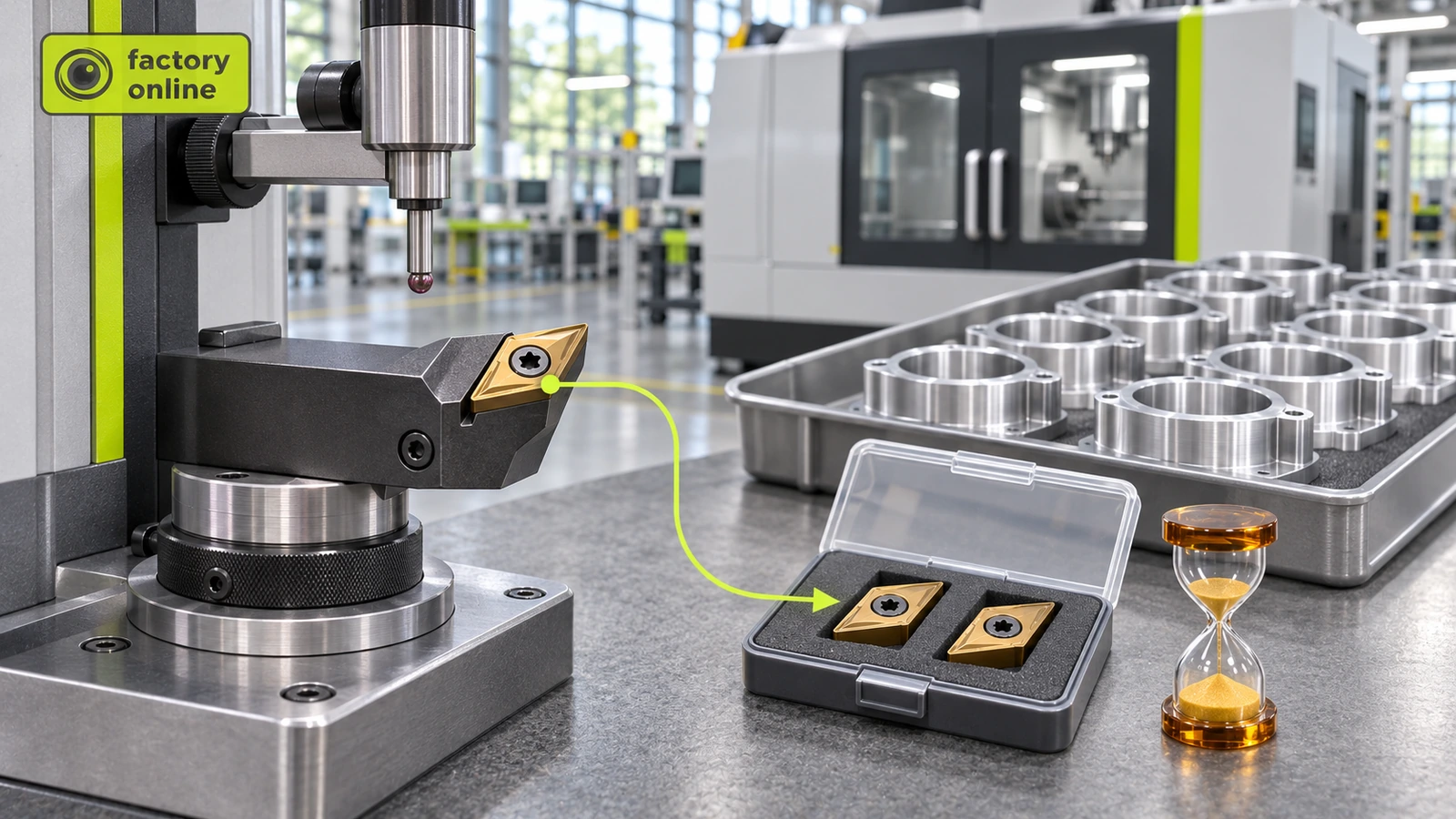
A 240-part order needs 8 hours of cutting time. The current insert edge has 60 parts of approved life remaining. Replacing it before the order feels like a sensible precaution. In this case, that choice adds a second 12-minute stop and turns an on-time finish into a late one.
Tool life planning accounts for the usable cutting life remaining on a tool and the time needed to replace or index it. Processing time alone can understate how long an order occupies a machine.
Count usable tool life before counting changes
Consider a machining center producing identical housings. It is ready at 08:00, operates continuously until 16:30, and has a production completion deadline of 16:15.
The setup is already approved. Each housing requires 2 minutes on the machine, so the order's processing time is:
240 × 2 \= 480 minutes, or 8 hours.
One critical insert edge limits the run. The shop's documented process permits 180 housings per edge under these cutting conditions. The current edge has produced 120 acceptable housings and passes the required condition check.
Its remaining planning allowance is:
180 − 120 \= 60 housings.
Every edge change stops this machine for 12 minutes. That includes indexing or replacement, the prescribed offset work and verification. Other tools have sufficient life, and no additional shared-resource wait is needed.
The 180-part limit belongs to this process example. A different material, cutting condition or wear result requires its own allowance.
Keep the current approved edge: finish at 16:12
The first 60 housings take:
60 × 2 \= 120 minutes.
Run from 08:00 to 10:00, then change the edge from 10:00 to 10:12.
The remaining quantity is:
240 − 60 \= 180 housings.
The new edge covers all 180. Processing takes:
180 × 2 \= 360 minutes, or 6 hours.
The order finishes at 16:12:
480 minutes cutting + 12 minutes changing \= 492 minutes.
There are 3 minutes before the 16:15 deadline. The plan fits, but the small margin is visible. Compare that margin with the variability already observed in the operation.
Fit a fresh edge first: finish at 16:24
Changing the approved current edge at 08:00 uses the first 12 minutes. The fresh edge starts cutting at 08:12.
Its 180-part allowance covers:
180 × 2 \= 360 minutes, finishing at 14:12.
The order still needs:
240 − 180 \= 60 housings.
A second edge change takes 14:12–14:24. The last 60 housings need 120 minutes, so completion moves to 16:24.
Total machine occupation becomes:
480 + 12 + 12 \= 504 minutes.
That is 12 minutes longer than retaining the current edge, and 9 minutes past the production deadline. Both versions fit the machine's 16:30 operating window. Only the first meets the 16:15 commitment.
The discarded 60-part allowance explains the difference. Removing usable life at the start did not make the 240-part requirement smaller.
Myth: a fresh tool always gives the safest schedule
Tool condition determines whether an edge is safe to keep running. A scheduling preference cannot override wear limits or a failed check.
In this example, the existing edge is approved for the next 60 housings. Keeping it uses that allowance before indexing. If the condition check fails, replace it and use the later completion time when revising the order plan.
The everyday equivalent is a label roll with 60 labels left. A print task needs 240, and each new roll holds 180. Using the remaining labels takes one roll change. Discarding them and loading a fresh roll takes two.
Compare the whole interruption, not just the replacement
Check whether the 12-minute stop includes everything needed to resume accepted production. Tool fetching, presetting, offset verification and any required approval consume time somewhere.
Preparing spare tools in advance can shorten a stop only when those activities move outside the machine's stopped time. The same distinction matters in changeover planning. Keep replacement time separate from product-to-product setup so it is counted once.
Moving the order to another machine needs its own approved process, tool state and setup time. Increasing cutting speed also changes tool wear; it is not a free reduction in processing time. Assess the complete alternative before moving a manufacturing order.
In factory.online, the planner can include a planned tool-change interruption in the operation sequence and compare completion times in planning scenarios. A finite-capacity production schedule then shows the 16:12 and 16:24 alternatives against the same deadline.
If your orders finish late despite correct cycle times, let's examine the tool-change time missing from the schedule.