

2 Nov 2026
Production Scheduling: How One Rush Order Can Delay Two Orders
An urgent order needs 3 processing hours, but interrupting another order adds two setups. Compare three sequences and see which one keeps both delivery commitments.
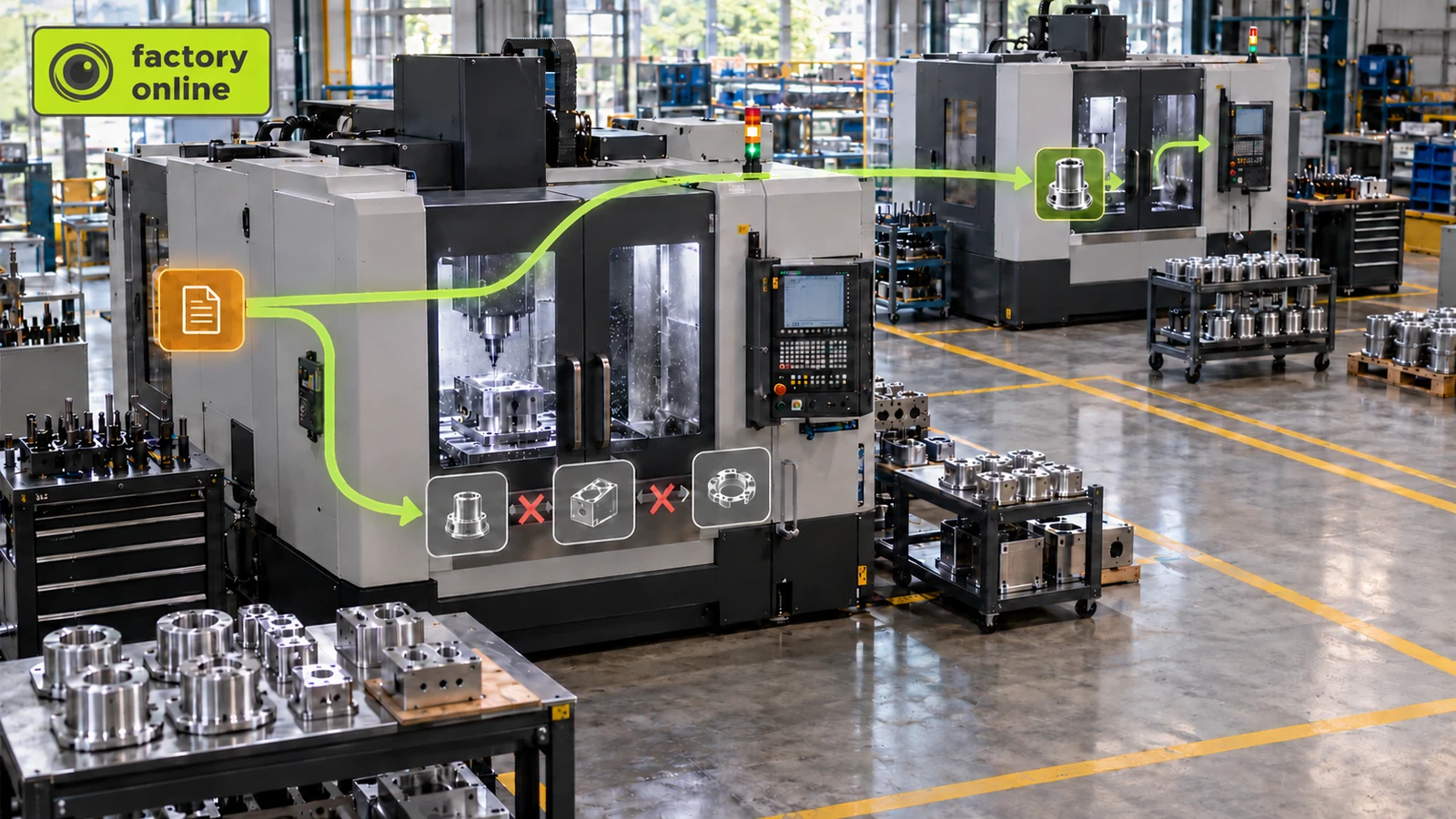
A machine has 8 hours of work left on its current order. A customer calls with an urgent order that needs just 3 hours of processing. The planner moves it to the front of the queue. By the end of the day, both the original order and the rush order are later than they needed to be.
Production scheduling is the process of assigning manufacturing orders to machines and time slots while accounting for capacity, setup times, priorities, and delivery deadlines. An order that takes 3 hours to produce may require much more than 3 hours of available machine time.
The hidden cost of interrupting a production run
Consider a machining center operating from 08:00 to 20:00, with no planned breaks or downtime during this window.
At 08:00, Order A has 8 hours of processing remaining. Its promised completion time is 16:00.
Order B is an urgent order requiring 3 hours of processing. Its customer needs it completed by 15:00.
Both orders use different fixtures and tools. Switching from A to B requires 45 minutes. Returning from B to A requires another 45 minutes.
The planner has three choices: interrupt A immediately, finish A first, or move B to another approved machine.
Production scheduling calculation: three possible sequences
Option 1: Interrupt Order A immediately
- 08:00–08:45: Change from A to B.
- 08:45–11:45: Process B.
- 11:45–12:30: Change back to A.
- 12:30–20:30: Complete A.
Order B finishes 3 hours 15 minutes before its deadline. But Order A finishes 4 hours 30 minutes late, and 30 minutes beyond the scheduled operating window.
The rush order is early. The original order is late.
Option 2: Finish Order A before starting B
- 08:00–16:00: Complete A.
- 16:00–16:45: Change to B.
- 16:45–19:45: Process B.
Order A finishes on time. Order B finishes 4 hours 45 minutes after its deadline.
This sequence avoids the second setup, but it does not meet the urgent customer's requirement.
Option 3: Use another approved machine
A second machining center is available at 09:00. Its processing rate is the same, but it requires a 60-minute setup.
- 09:00–10:00: Prepare the second machine.
- 10:00–13:00: Process B.
- 08:00–16:00: Complete A on the original machine.
Both orders finish on time. Order B has 2 hours of delivery buffer.
The second machine uses 4 hours of capacity, including setup, but avoids delaying Order A.
Myth: The highest-priority order must run first
Priority does not always mean immediate interruption.
In this example, interrupting Order A creates 90 minutes of setup work and delays a previously committed order. The alternative machine requires only 60 minutes of setup and keeps both commitments.
If the second machine were unavailable, the planner would need to negotiate a delivery change or evaluate approved overtime. Priority alone cannot create additional capacity.
Think of cooking dinner when a second guest suddenly requests a different dish. Stopping the first dish halfway through, cleaning the kitchen, preparing the new meal, and then returning to the original dish can make both meals later. Using another available burner or finishing the first dish may be better.
What a planner should compare before resequencing
A useful production schedule accounts for more than processing time.
The planner needs to compare the completion time of every affected order, the setup time introduced by a change, and the capacity available on alternative equipment.
The important question is not which order starts first. It is which sequence meets the most important commitments with the least disruption.
In factory.online, a planner can compare machine assignments and order sequences in a finite-capacity Gantt schedule, including the effect of moving work between available resources.
When the next rush order threatens an existing delivery, let's examine your production schedule together.