

27 Jul 2026
Batch Traceability: Find Every Meter of a Recalled Lot in 30 Minutes
A supplier calls about compound lot 4471. Learn how forward and backward tracing work, why recording detail decides the size of a recall, and how to run a timed mock recall.
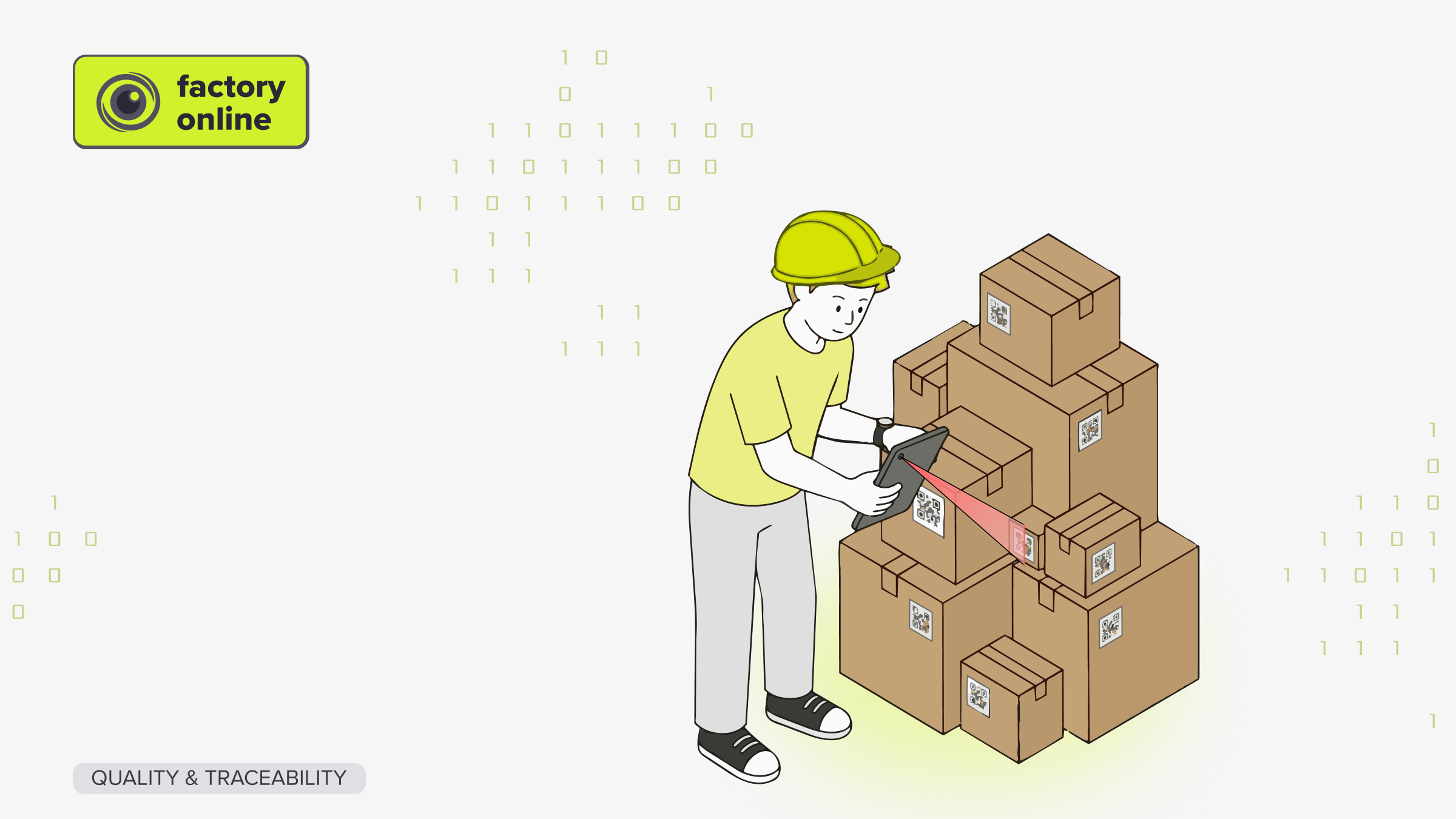
The phone rings at 9:10. Your compound supplier says lot 4471 of insulation compound may be contaminated. Which cables contain it? Which drums are still in your yard, which are at the customer's site, and which are in a truck somewhere on the highway? The customer's quality manager wants an answer before lunch.
Batch traceability is the ability to follow a specific lot of material through production in both directions: from a raw material lot to every product and customer that received it, and from any finished product back to every lot that went into it. Also called lot tracking, it is what turns a supplier recall from a week of panic into half an hour of work.
Forward and backward trace: a family tree
The easiest way to picture traceability is a family tree.
- Backward trace asks: who are this drum's ancestors? Start at a finished drum of cable and go up: which insulation run, which compound lot, which copper coil, which supplier delivery.
- Forward trace asks: who are this lot's descendants? Start at compound lot 4471 and go down: which extrusion runs used it, which drums they filled, where those drums are now.
Both directions use the same links. If a link is missing at any generation, for example a material issue booked to "the order" but not to a lot, the tree breaks, and everything below that point becomes "possibly affected."
Why the recall scope depends on how you record
Here is the difference traceability detail makes in a cable plant.
An extrusion order produced 5,000 meters of cable, wound onto five drums: four drums of 1,150 m and a final drum of 400 m (4 × 1,150 + 400 = 5,000). The hopper ran on compound lot 4470 for most of the run. The operator loaded lot 4471 only for the last part, which went onto the 400 m drum.
- Traced per order: the system only knows that the order consumed lots 4470 and 4471. All five drums are suspect. You hold 5,000 meters.
- Traced per container: each drum records which lot fed it. Only the last drum is suspect. You hold 400 meters.
The other 4,600 meters ship on time. The difference is a single piece of data: which lot was in the hopper when each drum was wound. How drums work as their own tracked units is covered in cable drums and containers.
Myth: "Our labels have lot numbers, so we're traceable"
A label says what lot a drum is. Traceability needs to know what went into it. Those are different facts.
Many plants print perfect labels and still can't answer the recall question. The compound bag was scanned at goods receipt, then emptied into a hopper with no record of which order or drum it fed. The label on the finished drum is correct and useless.
The test is not "do we have lot numbers?" It is "can we rebuild the family tree from the system without asking anyone?"
Run a mock recall drill with a timer
The only way to know your traceability works is to test it. Once a quarter, pick a real raw material lot, start a timer, and answer four questions.
- Where did it go? List every order and container that consumed the lot. Target: 10 minutes.
- Where is that output now? In stock (which location), in WIP, or shipped (to whom, on which delivery). Target: 10 more minutes.
- Does the quantity balance? Compare what you received with what you can account for.
- Can you stop it? Put every affected container on hold in the system. Target: done by minute 30.
The mass balance in step 3 is where drills get interesting. Say you received 1,000 kg of lot 4471. The system shows 620 kg consumed in production, 350 kg still in stock and 25 kg scrapped. That is 620 + 350 + 25 = 995 kg. Five kilograms are unaccounted for. Half a percent sounds small, until the customer asks where it went. Usually it is a partial bag returned to stores without a booking, or a purge that was never recorded.
Write down the time for each step and every link you had to ask a person about. Those links are your fix list.
Where traceability usually breaks
- Partial returns. Half a bag goes back to stores and loses its lot number.
- Lot changes mid-run. The hopper switches lots, but the order records only one of them.
- Rework. A drum is rewound or cut, and the new drum is not linked to the old one.
- Receipt without inspection status. A lot is used before its incoming quality check is finished.
- Inconsistent item setup. Some items are lot-controlled, similar ones are not. Getting the item master right is covered in item master data and variants.
Once you find the suspect drums, the next decision is what to do with them: re-test, downgrade or scrap. That is part of quality management, and it goes much faster when the hold covers 400 meters instead of 5,000.
How it looks in factory.online
In factory.online, each drum or container is tracked as a batch with its own length and location, and consumption is recorded against the batches actually used. In the lot 4471 case, a planner opens the lot, follows it to the extrusion order and then to the one 400 m drum it fed, sees which location that drum sits in, and puts it on quality hold. The four 1,150 m drums stay available for their orders.
BEEDIGIT links quality checks, accepted and rejected output, and traceability records to shop-floor work. This adds production context when investigating defects or deciding which quantities can move to the next operation.
If your last recall drill needed a whiteboard and three phone calls, book a demo and run the next one with us.