

4 Nov 2026
Inventory Accuracy: Why 500 Parts in Stock Can Stop Production
The report shows 500 housings, but only 180 are available for an order needing 300. See how reservations and quality holds change the purchasing decision.
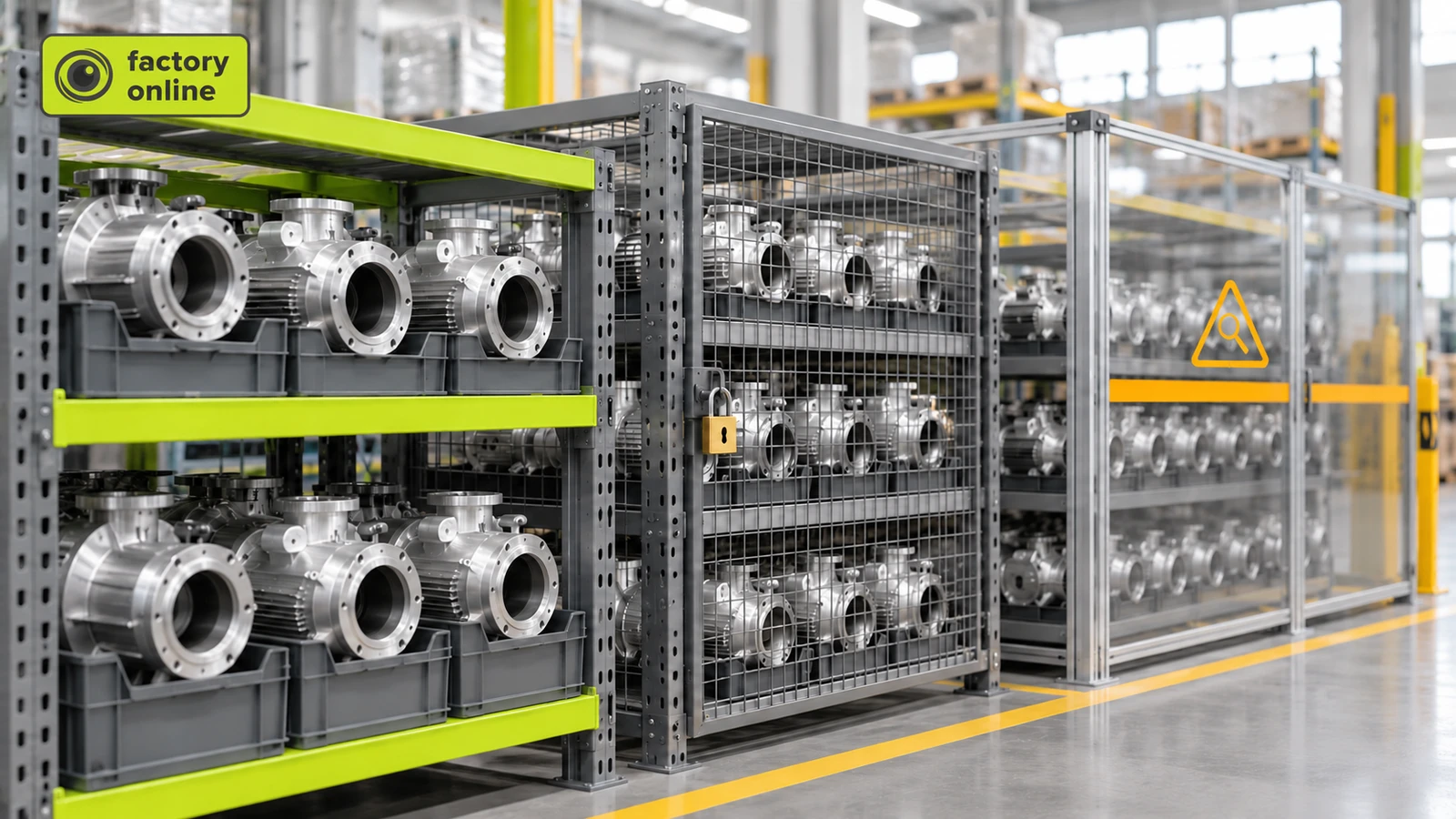
The inventory report shows 500 motor housings. A production order needs 300, and the planner releases it. Two hours later, the warehouse reports that only 180 housings can be issued.
The inventory count was correct. The production decision was not.
Inventory accuracy describes how closely recorded inventory matches the actual stock in the business. But accurate on-hand inventory does not automatically mean the material is available for a new production order.
On-hand stock is not the same as available stock
A warehouse can physically contain material that cannot be used for a particular order.
Some stock may already be allocated to another order. Some may be held for quality inspection. Other quantities may be in a location from which they cannot be issued immediately.
Consider a factory assembling industrial pumps.
Its inventory system reports 500 motor housings.
The stock consists of:
- 180 unrestricted housings available for new orders.
- 200 housings allocated to an existing production order.
- 120 housings held for quality inspection.
The physical total is correct:
180 + 200 + 120 \= 500 housings.
However, the quantity available to the new production order is only 180.
The new order requires 300 housings.
300 − 180 \= 120 housings short.
The warehouse does not have a counting problem. It has an availability problem.
Why the next purchase order may not solve the shortage
A planner sees the 120-unit shortage and considers ordering another 120 housings.
But purchasing is not necessarily the fastest solution.
Suppose the 120 housings on quality hold are awaiting an inspection that can be completed before the new order starts.
If all 120 pass inspection and are released, available stock becomes:
180 + 120 \= 300 housings.
The new order can be supplied without an additional purchase.
If 20 housings fail inspection, only 100 are released:
180 + 100 \= 280 housings.
The remaining shortage is:
300 − 280 \= 20 housings.
The purchasing decision has changed from 120 units to 20.
Before ordering, the planner should check when the inspection will finish, whether the released material is suitable for the order, and whether incoming supply can arrive before production needs it.
Myth: A correct stock count prevents material shortages
A stock count verifies quantities. It does not establish whether those quantities are free to use.
Imagine having $500 in a bank account. If $200 is reserved for rent and $120 is needed for an upcoming bill, you cannot safely spend the full $500 on something else.
The balance is correct. The amount available for a new purchase is different.
Manufacturing inventory works in a similar way.
An accurate physical count is necessary, but the planner also needs reliable information about allocations, holds, and expected receipts.
How to make the shortage visible before production starts
The production order should not be released based only on the total on-hand quantity.
A planner should identify the unrestricted stock, subtract quantities committed to other orders, and check when held or incoming material can become available.
In factory.online, MRP can connect manufacturing demand with stock, open supply, and order-level shortages. Inventory locations and quality holds help distinguish material physically present from material ready to issue.
The useful result is a purchasing and production decision based on the quantity the order can actually use.
If your inventory report shows enough stock while production still waits for parts, let's review how shortages appear in your planning process.