
30 Aug 2026
BHAG Digital Conference in Tashkent: Turning Industry 4.0 into Practical Manufacturing Results
BHAG Digital’s international conference in Tashkent explored practical Industry 4.0 approaches, from SIRI and BEEDIGIT MES to loss analysis and integrated production planning.
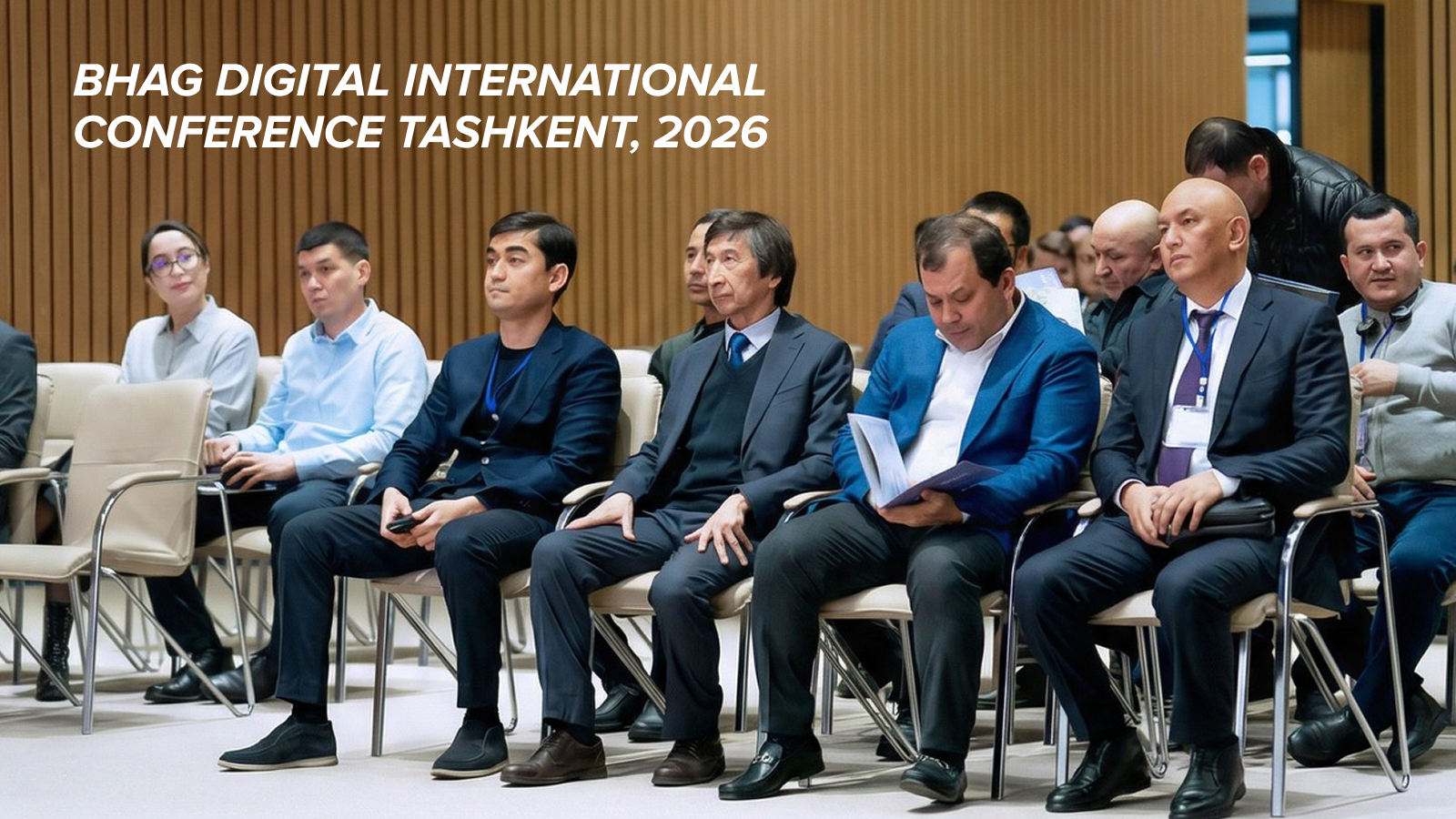
BHAG Digital brought together industrial business owners and senior executives in Tashkent, Uzbekistan, for an international conference focused on practical approaches to Industry 4.0. The discussions explored how manufacturing companies can improve production transparency, identify hidden losses, and connect planning with real-time execution through digital technologies.
Bringing Industrial Leaders Together in Uzbekistan
The BHAG Digital International Conference 2026 in Tashkent brought together representatives of industrial enterprises from multiple manufacturing sectors, including automotive, building materials, food processing, cable manufacturing, and polymers.
The conference focused on a fundamental challenge facing modern manufacturers: how to move from fragmented production information and reactive decision-making toward greater operational visibility and control.
Rather than approaching Industry 4.0 as a collection of technologies, participants explored its practical application to everyday manufacturing challenges.
Discussions centered on three recurring operational issues:
- Limited production transparency: Difficulty obtaining accurate, timely information about manufacturing performance.
- Insufficient operational control: Challenges in identifying deviations, understanding production losses, and coordinating resources.
- Delayed decision-making: Dependence on fragmented information and retrospective reports rather than real-time operational data.
The conference provided a platform for exchanging implementation experience and discussing how connected manufacturing systems can address these challenges.
From Digital Transformation Concepts to Real Implementation Cases
A central part of the conference was the presentation and discussion of practical industrial digitalization cases.
Participants explored how manufacturing organizations can use connected production data and structured management processes to improve visibility and operational performance.
The discussions covered several areas of industrial transformation:
- Establishing real-time visibility into production processes and equipment performance.
- Identifying hidden production losses and opportunities for improvement.
- Connecting production planning with shop-floor execution.
- Improving the coordination of production resources and operational priorities.
- Supporting more proactive, data-driven management decisions.
These examples reinforced an important principle: successful digital transformation requires more than introducing individual software systems. It depends on connecting data, processes, and management decisions across the manufacturing organization.
A Structured Approach to Industry 4.0 Transformation
BHAG Digital presented an end-to-end approach to manufacturing digitalization, combining industrial maturity assessment, real-time production monitoring, loss analysis, and integrated production planning.
The approach connects several complementary elements.
Assessing Digital Maturity with SIRI
The Smart Industry Readiness Index (SIRI) provides a structured framework for assessing a manufacturer's digital maturity and identifying priorities for transformation.
By evaluating the current state of processes, technologies, and organizational capabilities, manufacturers can develop a clearer roadmap for Industry 4.0 implementation.
Real-Time Production Management with BEEDIGIT MES
BEEDIGIT MES supports manufacturing execution management and production performance monitoring.
Through MES and Overall Equipment Effectiveness (OEE) capabilities, manufacturers can improve visibility into equipment utilization, production downtime, and operational performance.
This creates a foundation for identifying inefficiencies and making better-informed production decisions.
Identifying Losses Through the Hidden Factory Approach
Another important topic was the Hidden Factory concept — the production capacity and performance potential lost through inefficiencies that are not always visible in conventional reporting.
These losses may arise from unplanned downtime, reduced equipment speed, quality deviations, or ineffective coordination of production activities.
Systematic loss identification helps manufacturers understand where improvement opportunities exist and prioritize corrective actions.
Connecting Planning and Execution with factory.online
While real-time production data helps manufacturers understand current operations, effective production management also requires coordinated planning.
factory.online addresses this challenge through production planning and scheduling capabilities designed to connect manufacturing orders, equipment capacity, resources, and operational priorities.
The platform supports manufacturers in:
- Coordinating production schedules across available resources.
- Identifying capacity constraints and potential scheduling conflicts.
- Adjusting plans in response to changing production conditions.
- Improving alignment between production plans and operational execution.
- Supporting more predictable manufacturing workflows and delivery commitments.
Together, production monitoring and planning technologies can help manufacturers move from reacting to operational problems toward making more informed and proactive decisions.
Why Operational Control Matters for Industrial Competitiveness
The discussions in Tashkent highlighted the growing importance of operational control for manufacturing companies seeking to improve efficiency and competitiveness.
Digital transformation is not defined solely by the number of connected machines or the amount of data collected.
Its practical value depends on whether manufacturers can use that information to understand production performance, coordinate operations, and respond effectively to changing conditions.
For industrial enterprises, this means building a connected management environment in which production data supports decisions at both operational and strategic levels.
The combination of maturity assessment, manufacturing execution systems, loss analysis, and advanced planning provides a structured approach to this challenge.
Supporting the Next Stage of Industrial Digitalization in Uzbekistan
The BHAG Digital International Conference in Tashkent demonstrated the value of bringing industrial leaders together to exchange practical experience and discuss real manufacturing challenges.
The participation of companies from different industrial sectors also highlighted the broad relevance of production transparency, resource coordination, and data-driven decision-making.
For factory.online, the conference provided an opportunity to present the role of integrated production planning within a broader Industry 4.0 transformation strategy.
As manufacturers continue developing their digital capabilities, connecting production visibility with coordinated planning and execution will remain an important part of building more responsive and efficient operations.
From assessment to implementation, and from production data to informed decisions — sustainable industrial transformation requires a connected, systematic approach.
Learn more about factory.online and the digital manufacturing solutions presented by BHAG Digital and BEEDIGIT MES.